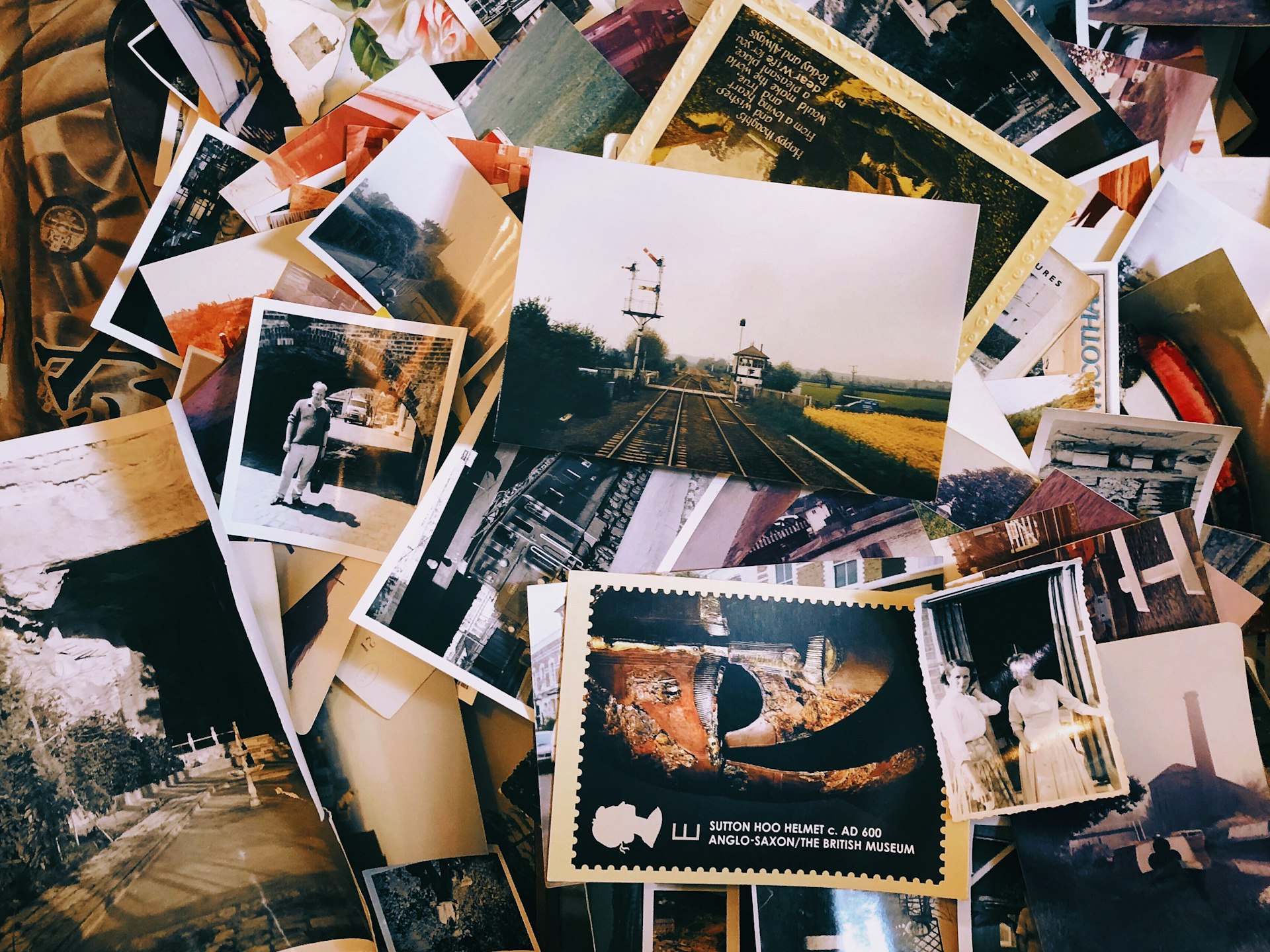
Google's promise about your photos now has an asterisk
Since October 16, your Google Photos, Gmail and Drive content can shape your ads if you connect them to Google's AI. What changed, and what did not.
Read More
4 min
Since October 16, your Google Photos, Gmail and Drive content can shape your ads if you connect them to Google's AI. What changed, and what did not.

What MCP is, why an open standard for AI tools matters, and how to connect an AI assistant to your PixelUnion library with the community-built ImmichMCP server.
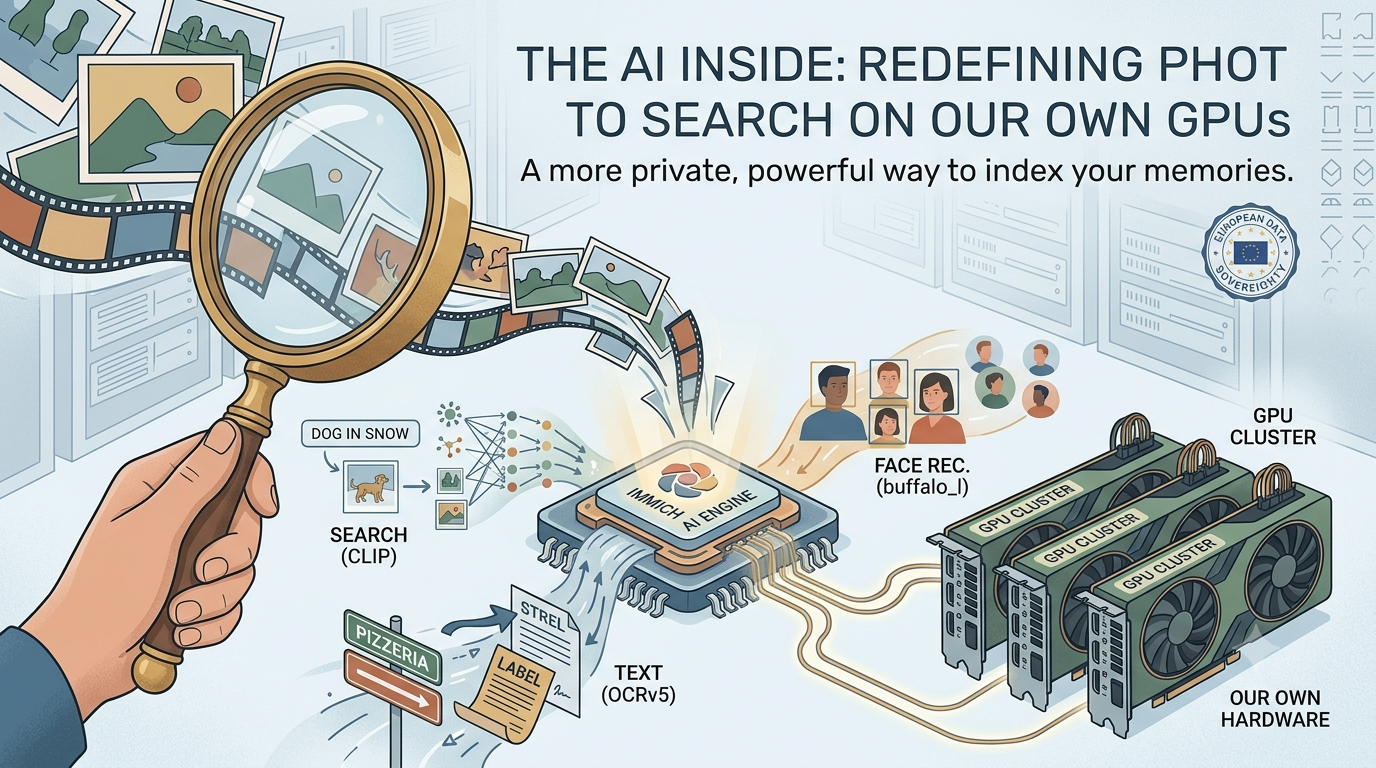
Immich runs three machine learning jobs to make your photos searchable: smart search, face recognition, and OCR. Here is what each one does, the models behind them, and why we now run them on our own graphics cards instead of on CPUs.
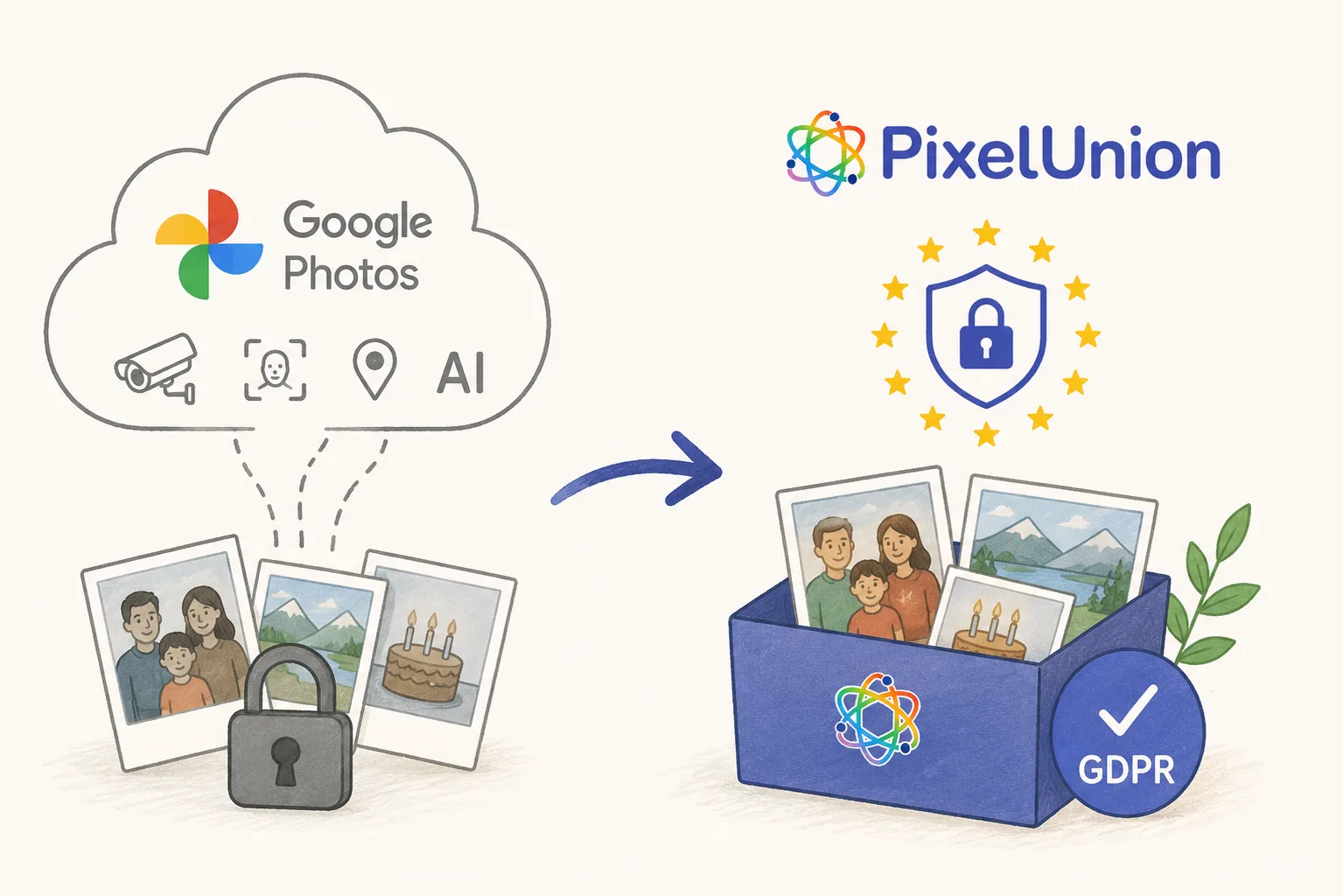
Google Photos is cheap and convenient, but you pay with your privacy. We lay out the risks and show why a European alternative is worth it.

AI is driving up the cost of RAM and storage globally. Here's what's happening in the market, and what it means for European cloud providers like PixelUnion.
When a U.S. export-control order silenced Anthropic's Claude Fable 5 across Europe overnight, it shattered the myth of the 'safe American cloud', and proved digital sovereignty is now a survival requirement.
Immich uses CLIP, an open-source AI model, to understand the content of your photos - so you can search for 'sunset at the beach' or 'birthday cake' and actually find them. No tags required.
Immich recognises the people in your photos and groups them together - privately, on your own server, with no data sent to Big Tech. Here is how it works and why it matters.
PixelUnion and Immich use powerful open-source AI models to recognize faces in your photo library - with impressive accuracy, and without ever training on your data.