From trend to ownership: how Big Tech profits from your photos
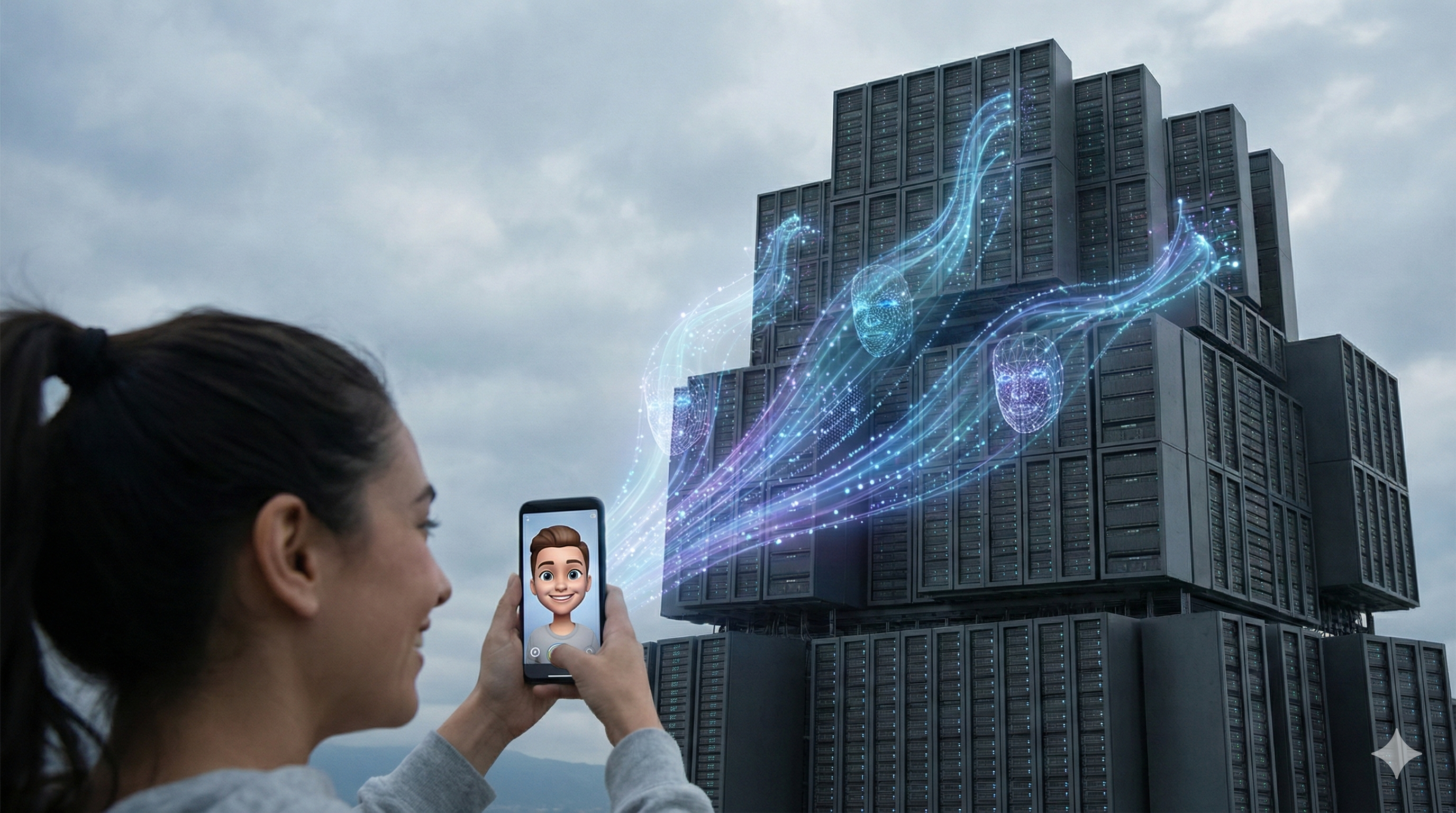
From muppet transformations to banana portraits: in recent years AI photo trends have washed over our timelines in waves. They seem harmless and funny, and that’s precisely their strength. You just upload a selfie; one click later a charming, shareable version of yourself appears. But behind that simplicity is a reality far less friendly to your privacy. What you join today for fun can tomorrow, unintentionally, help build an infrastructure that collects biometric data, builds profiles and reuses images in ways you never intended.
What you see is a cute output. What you don’t see is the journey your photo takes once you upload it. In those first seconds, algorithms map your face: unique features, proportions, expressions-small details that make you identifiable even outside the context of this one photo. Your image doesn’t simply disappear; it may remain on servers “as long as necessary” or “to improve the service.” That vagueness isn’t a footnote-it’s carte blanche to store, analyze and reuse. Meanwhile partners, cloud providers and analytics services can look on. And the more little pieces of data that exist about you, the easier they are to link to your social profiles, location trails and purchasing behavior.
The consequences aren’t just theoretical. High‑quality photos are perfect base material for deepfakes. Realistic fake accounts using your real images make phishing and scams more convincing-especially to people who know you. Some generated images also retain enough detail to fool facial recognition, with all the risks to accounts or systems that rely on it. And because the internet rarely truly forgets, copies resurface years later in contexts you don’t control.
Why do we still join en masse? Because social pressure is strong. When friends, influencers and familiar faces embrace a trend, it feels safe. The aesthetic reward is immediate, the risks are abstract and deferred. “Free” apps and sites create the impression that the game has no cost, but the bill comes in data: you cannot reset your face like a password. Add FOMO-the fear of missing a fleeting hype-and it’s understandable that millions reach the same decision within days: upload and post.
In Europe, thanks to the GDPR and upcoming AI regulation, you do have strong rights. Transparency, purpose limitation, data minimization and the right to be forgotten aren’t formalities-they’re the backbone of your digital self‑protection. If your photos end up on servers outside Europe, different rules may apply-and enforcing your rights can become much more complex. Geopolitics also plays a role: laws such as the US Cloud Act can, under certain circumstances, compel access to data regardless of what a privacy policy promises.
There is an alternative for those who want creativity without giving up privacy. At PixelUnion we start from the opposite principle: your photos are yours. We store them only in Europe, under European law. We don’t track you, sell nothing and don’t build profiles in secret. We choose transparency by leaning on open‑source (Immich), so the technical choices are verifiable. And we limit data processing to what’s necessary to keep your library fast, safe and pleasant-no backdoors in the name of “service improvement.”
That doesn’t mean you must avoid every trend. It means you can choose more deliberately. Ask yourself: can this be done locally, on my own device, without an upload? If you really want to generate an image, choose tools that don’t require server‑side processing or that clearly-and enforceably-state what happens to your photos and how you can delete them. Wherever possible, use older or less identifiable images-not the Christmas dinner with your whole family, not the high‑res portrait you also use for job applications. Then share the result from an environment you control, with the ability to decide who sees what and for how long, and to revoke access.
For many people, digital autonomy begins with something simple: bringing your entire photo archive back under your own terms. Migration can seem daunting, but it’s doable. Export your library from Google Photos, import into PixelUnion, and organize your memories with albums and timelines. Share selectively with temporary links and passwords.
At its core, this isn’t technology versus fun; it’s conscious ownership. Every upload to big tech is a small vote about how digital culture treats our faces and memories. If we keep uploading out of convenience, we normalize biometric data drifting through ecosystems whose primary business is data extraction. If we choose more consciously, a different norm emerges: creativity with privacy, innovation with freedom of choice.
The next time a muppet or banana trend takes over your timeline, remember that the most important image isn’t the output you post-it’s the input you give away. You decide whether that input becomes part of an opaque mountain of data or whether you keep it safe under your own control. At PixelUnion we help you do exactly that-with European storage, open‑source transparency and settings that put your control at the center. That’s how the joy of making and sharing stays where it belongs: with you.