Why it's time to leave Google Photos
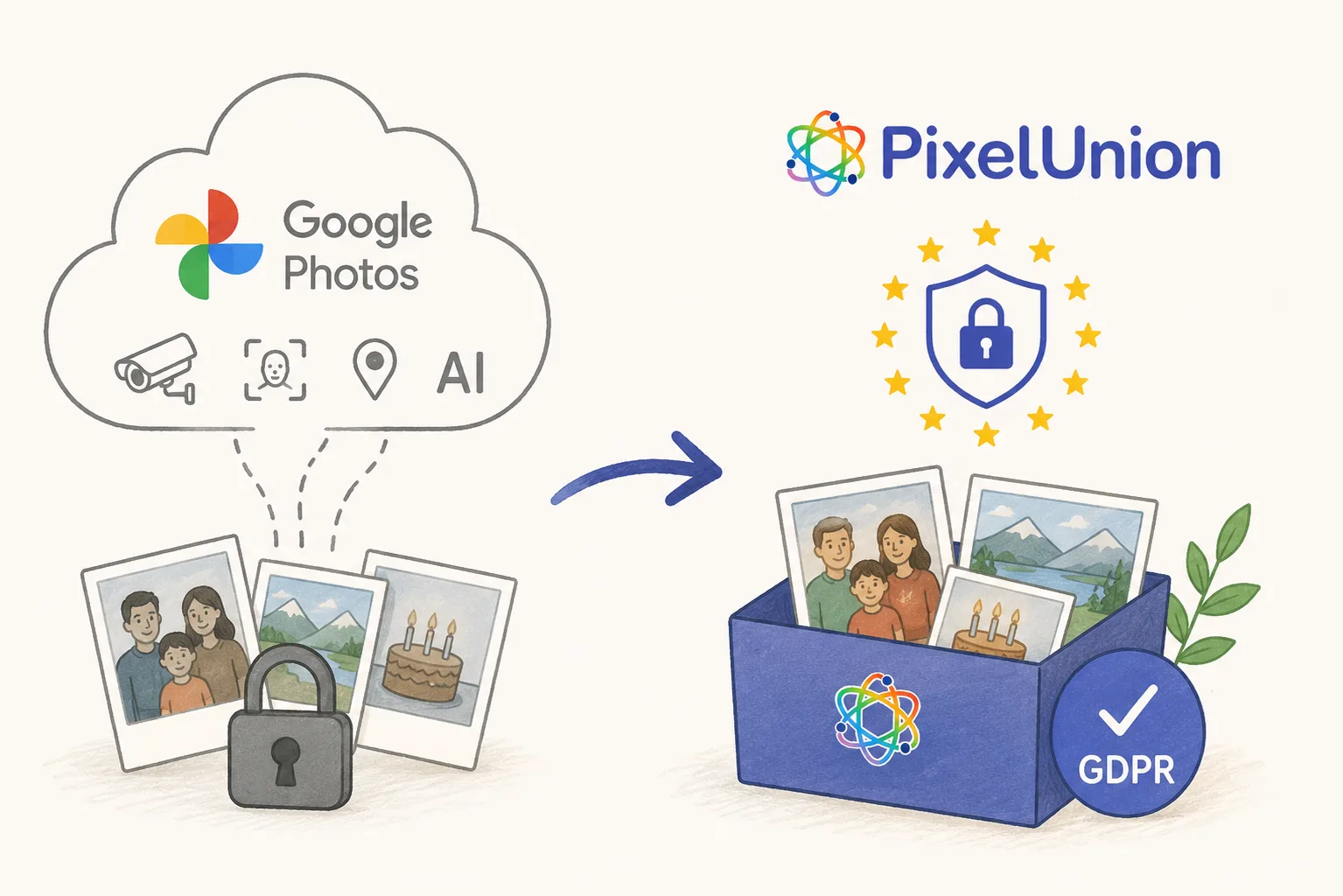
We take more photos than ever. With its billion users, Google Photos seems like the logical place to keep those memories: convenient, and deeply woven into your phone. But that “free” convenience comes at a price. While Google stores your memories, it also uses them for its own purposes.
We believe privacy is not an extra. That’s why we’re laying out what happens to your photos at Google, and why a European alternative is worth considering.
Your photos aren’t really yours
Google quietly changed the rules. Photos you upload can be used to train Google’s AI models, whether it’s a family snapshot, a screenshot or a holiday photo. Your private library, built up over ten years, becomes a dataset that gives you nothing in return. Every birthday, every hospital photo, every moment you’d rather have kept to yourself: it all goes through the same mill.
On top of that, Google holds the keys to your digital vault. Technically, employees or automated systems can see what’s in your photos, where they were taken and who’s in them. Google analyses that metadata, those locations and faces, and sometimes draws conclusions about who you are based on details like clothing or a watch. Think it through. Your photos can reveal where you live, when you’re away from home, who you spend time with, which doctor you visit and which church or mosque you walk into. That information doesn’t disappear. It can resurface years later for profiling, by advertisers or by parties you never gave permission to.
When it goes wrong, it goes badly
That lack of privacy doesn’t come without consequences. Google scans photos with AI for illegal content. The intention is good, but the algorithms make mistakes, and those mistakes hit real people. In 2021, a father from Texas was reported to the police and lost his account after sending a medical photo of his son to the doctor. Innocent, but the algorithm thought otherwise.
Imagine it happens to you. You take a photo of a rash on your child’s back to send to the family doctor. A system flags the photo. Without warning, your account is frozen. In one stroke you lose not only your photos, but also your Gmail, your calendar, your documents and the login you use to reach dozens of other services. You get a standard email, no human on the line, and no proper way to appeal.
Or think ahead. Five years from now, an insurer, an employer or a government agency wants to know who you are. The faces, locations and patterns from your photo library have been stored for years by then, ready to be linked together. You once took those photos to capture a moment, not to build a profile. Yet that’s exactly what happens.
A European alternative
Your photos don’t have to go through that mill. At PixelUnion they sit on European servers, under the GDPR. They aren’t scanned for AI training and aren’t analysed for profiling. No algorithm that freezes your account out of nowhere, no profile that gets used against you years later. The platform is open source, so you don’t have to take anything on trust.
Away from Google, away from the American tech giants, and your memories under your own control. That’s exactly what PixelUnion is built for.