America's Digital Kill Switch
Every day we upload photos, sign into software, and trust that things will just work. Most of the time they do. But on June 12, 2026, something happened that should make everyone stop and think.
The U.S. Department of Commerce issued an export ban on Anthropic’s most advanced AI models. Not for a specific country. Not for a specific group. For everyone, globally, overnight. Because verifying the nationality of millions of users in real time is technically impossible, the simplest solution was to just turn it off for the entire world.
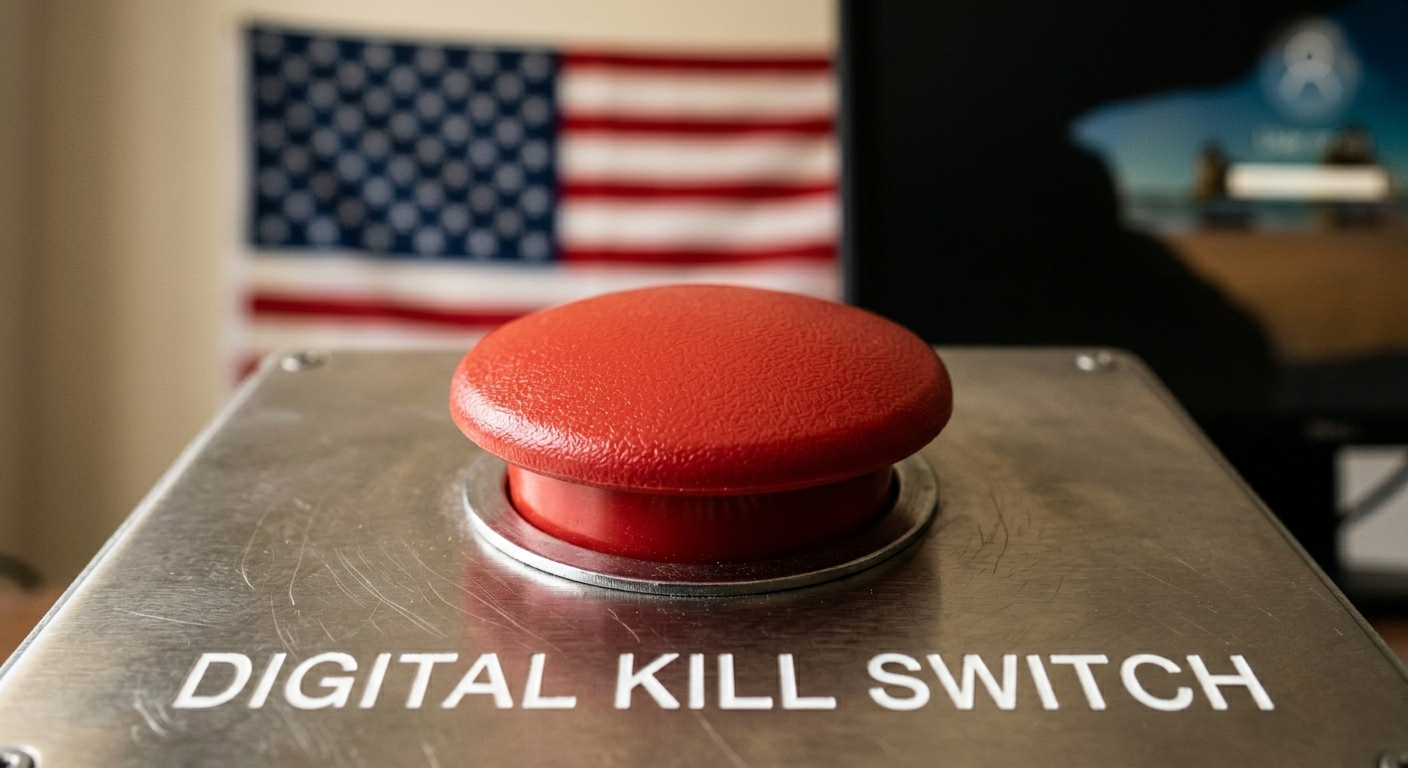
That’s the kill switch in action.
America’s grip on global infrastructure
This wasn’t an isolated incident. The tools and infrastructure that power most of the digital world sit under U.S. jurisdiction, and Washington has shown it’s willing to use that position.
In 2025, Microsoft blocked the email of the International Criminal Court’s chief prosecutor after the U.S. imposed sanctions on the court. Just like that, a major international institution lost access to its own communications because of a political decision made in Washington.
This is what the U.S. Cloud Act looks like in practice. It doesn’t matter if your servers are physically located in Amsterdam or Frankfurt. If the company is American, your data is subject to U.S. law. And when that law is invoked, the provider is legally required to comply in secret, without telling you.
The scenarios nobody wants to think about
The Microsoft situation was uncomfortable. But the broader possibilities are genuinely alarming.
Imagine sweeping sanctions against a European institution that relies on American software. Not just email goes down. Payroll stops. Physical security systems fail. Years of records become inaccessible. An entire organization, digitally paralysed, with no recourse.
Or consider the Strategic Subsea Cables Act of 2026, which gives the U.S. leverage over the undersea cables that carry 95% of global internet traffic. In a conflict scenario, Washington could delay or block repairs to cables connecting Europe, effectively isolating entire regions.
And then there’s the open source question. Platforms like GitHub could be pressured to block contributions from non-American developers. The thing we’ve long treated as a global common good becomes a geopolitical instrument.
None of this is science fiction. The groundwork is already there.
GO EUROPE
Europe needs to get serious about digital independence. Not as a political statement, but as a practical necessity. Relying on American infrastructure means accepting that someone else holds the off switch to your data, your tools, and your communications.
Start small if you have to. Look at what you use daily and ask whether a European alternative exists. For your photos and videos, PixelUnion is one of them.