Why Cloud Costs Are Exploding

The rapid rise of AI isn’t just changing how we work. It’s quietly driving up the cost of the infrastructure that powers everything we do online. In 2026, cloud and hardware costs have risen sharply across the board, and the main culprit is a global shortage of the components that make modern computing possible.
The AI industry’s appetite for memory
The root of the problem lies in how the semiconductor market has shifted. The three major memory manufacturers, Samsung, SK Hynix and Micron, have redirected a significant share of their production capacity toward High Bandwidth Memory (HBM). This is the specific type of memory that powers AI servers like those used by Nvidia. The side effect is that far less capacity is available for the standard components used in regular servers and PCs.
Analysts are calling this a structural shift rather than a temporary blip. A 32GB RAM module that cost around €100 to €120 last year now goes for €450 to €500. SSD prices have followed a similar trajectory, partly driven by NAND chip costs doubling.
What this looks like at Hetzner
The impact is visible at major European hosting providers. Hetzner, one of the largest and most respected infrastructure providers in Europe, implemented sweeping changes to its server portfolio on June 15, 2026. New orders and rescaled cloud instances are now subject to significantly higher pricing, with the company citing massive increases in procurement costs as the reason.
The price differences are stark. Across the board, prices roughly doubled or tripled within two days. Hetzner cites massive increases in procurement costs as the reason, the full breakdown is below.
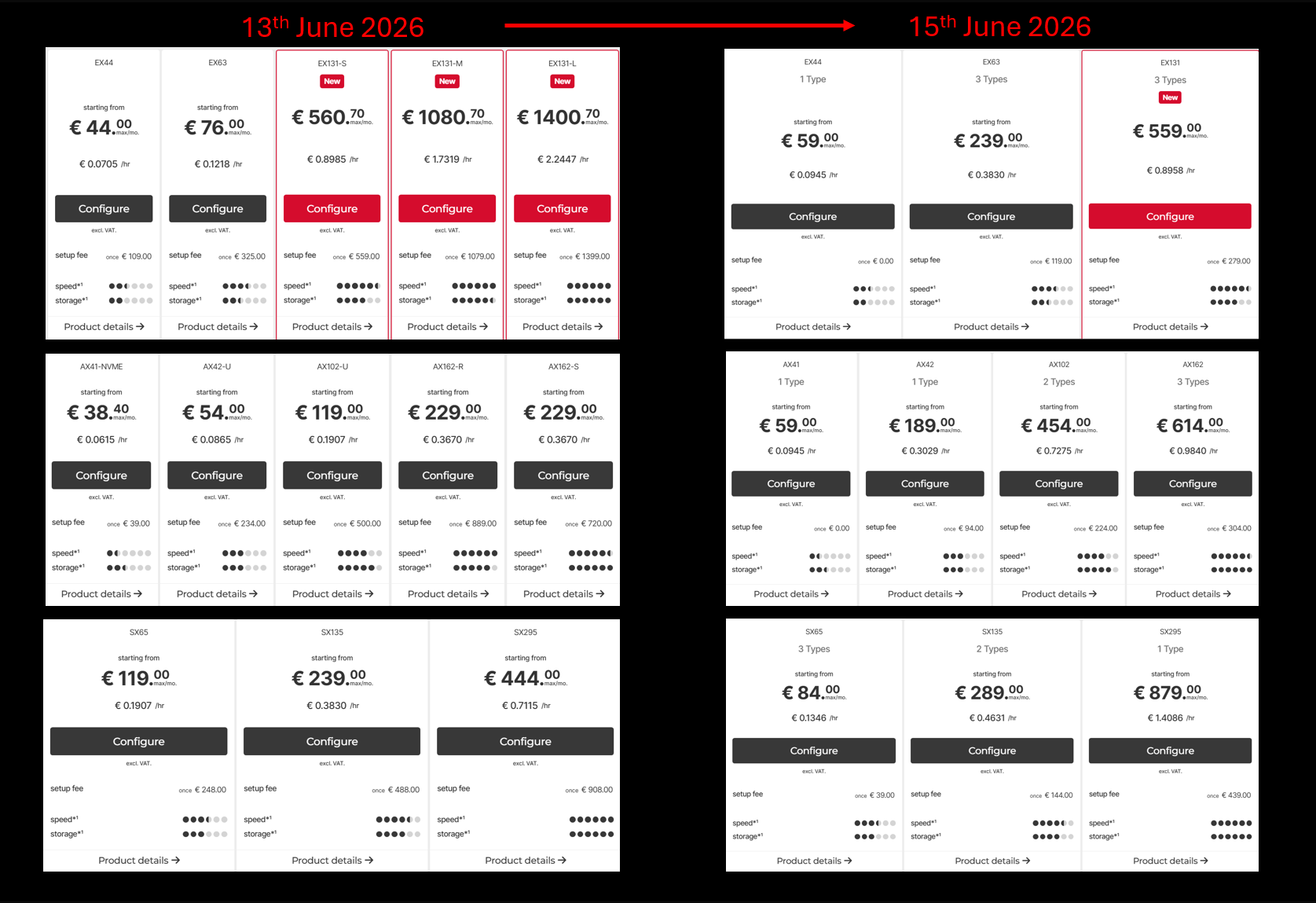
Existing contracts are being honored for now, but businesses are being forced to rethink their infrastructure strategies.
What this means for PixelUnion
These cost increases hit us too. PixelUnion runs on European infrastructure, which means we’re facing the same price hikes as everyone else in this market. Storage, memory, compute: all of it costs more than it did a year ago.
The AI boom has reshaped the cloud market in ways that go beyond a single price list update. For services built around privacy, local storage and European independence, the challenge is navigating a market where the cost of doing things the right way keeps rising.
We’re doing our best to keep that from reaching our users. Staying competitive with platforms like Google isn’t always easy, but it’s something we’re committed to working at. The market can shift, costs can rise, but we’re not going anywhere. Europe deserves a real alternative, and we’re going to keep building it.