Google and Apple Now Call Lake Ontario "Lake America"
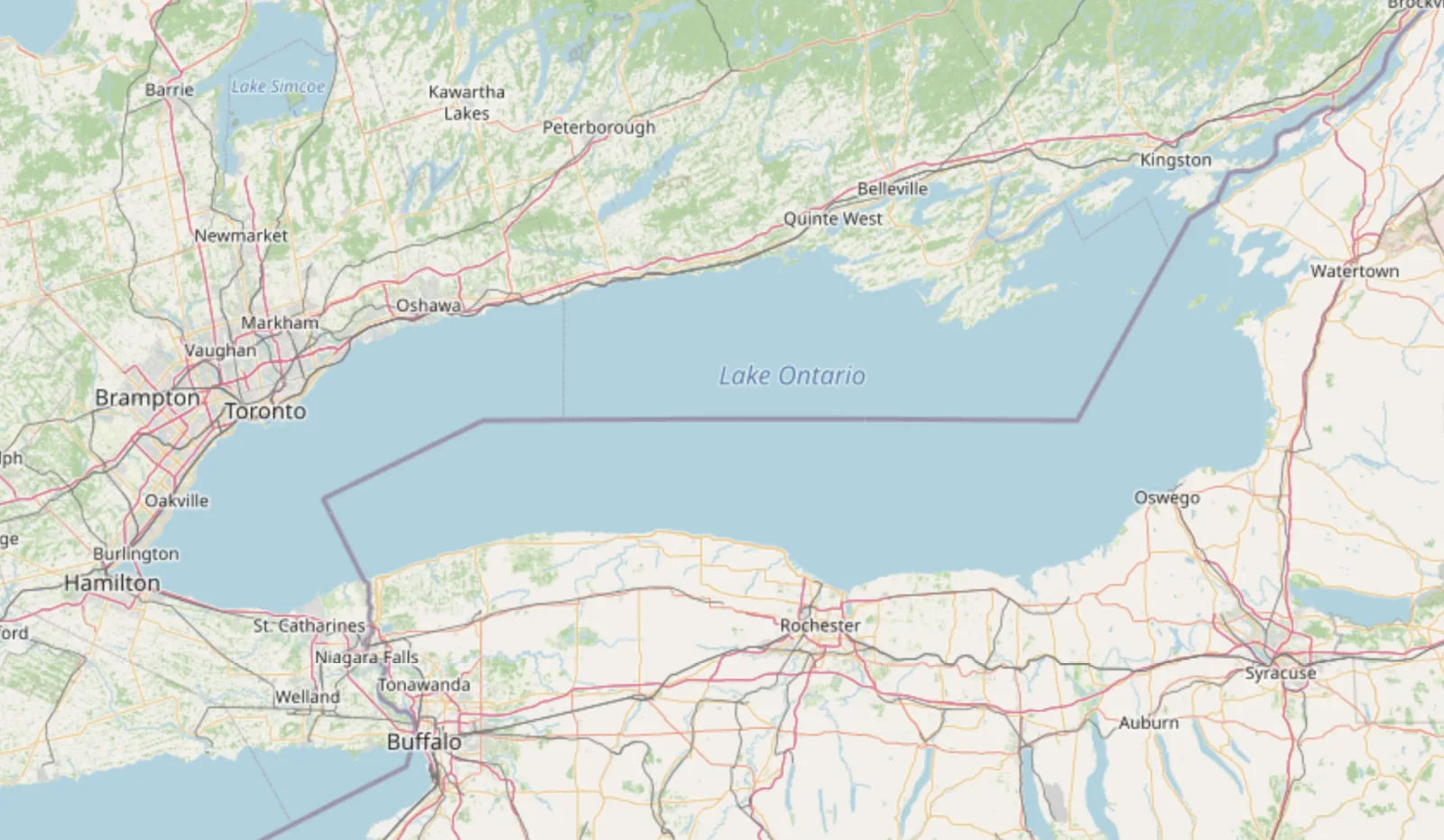
On August 27, 2026, US President Donald Trump signed a remarkable federal decree: Executive Order 14422. The document ordered Lake Ontario, one of the five great border lakes with Canada, to be officially renamed “Lake America” with immediate effect. What looks, at first glance, like an absurd geopolitical jab in an escalating trade war with Canada actually exposes a deep and unsettling risk about the power of American tech companies.
Within days, tech giants like Google and Apple obligingly updated their world maps to comply with the whim of an American president. At PixelUnion, we believe privacy and digital independence go hand in hand. This piece looks at why it’s more dangerous than ever to entrust our digital infrastructure and data to American Big Tech platforms.
Erasing History for a Trade War
Washington’s unilateral renaming deliberately ignored the region’s centuries-old history. The name “Ontario” comes directly from the Wendat word Ontari’io (or the Iroquois-Wendat Ontarí’io), meaning “great” or “beautiful lake.” This Indigenous name is more than 400 years old, considerably older than both the Canadian Confederation and the American Declaration of Independence.
What’s more, the renaming directly violates historic treaties with Indigenous nations. The Seneca Nation strongly opposed the change, arguing that the name “Lake Ontario” is explicitly enshrined in the 225-year-old Treaty of Canandaigua, which legally established their territorial boundaries. Even New York State refused to adopt the federal directive on its own maps.
So why did Trump do it? The renaming was an asymmetric bargaining chip in an economic conflict. After bilateral trade talks stalled, the US imposed 50 percent import tariffs on $20 billion worth of Canadian goods, and Canada retaliated in kind. To back up the claim, the US government leaned on the geographic argument that the lake’s deepest trenches lie in American waters.
How Big Tech Fell in Line
Although a presidential decree has, in theory, no legal authority over private companies, Google and Apple updated their navigation software within days. This behavior shows just how exposed these giants are to federal pressure, partly because of their dependence on lucrative government contracts and the looming threat of antitrust investigations.
Google Maps rolled out the change immediately, on Saturday, August 29. It introduced geographic segmentation: users in the US see only “Lake America,” Canadians see “Lake Ontario,” and the rest of the world sees both names. Apple Maps followed on Tuesday, September 1 — the exact first official working day of new CEO John Ternus. Although Tim Cook handed over the CEO role, he retained direct responsibility for the company’s strategic relationship with the White House. After a direct personal call from Trump, the map was updated for American users.
This isn’t the first time these companies have bowed to cartographic nationalism. In 2025, Google and Apple already renamed the Gulf of Mexico to the “Gulf of America” on American screens, which even led to a lawsuit from the Mexican government against Google.
The MapQuest Rebellion, and Open Source
Fortunately, there’s resistance. The 30-year-old pioneer MapQuest categorically refused to go along with the renaming. With a simple social media post, “We’re not changing it,” and a tool letting users project satirical names like “Lake Are We Doing This Again?”, the company sparked a genuine consumer revolt.
The result? A spectacular comeback. MapQuest shot straight to the number one spot for free downloads in the US and Canadian iOS App Stores. Weekly downloads surged past 184,000, and daily active use ran fifty times higher than normal.
At the same time, interest grew in open-source alternatives like Organic Maps and OsmAnd, which source their data from OpenStreetMap (OSM). Because OSM is maintained by a decentralized, global community, it’s immune to the unilateral decrees of any single government.
The Three Big Dangers of Big Tech Compliance
Why should a European care about the name of an American-Canadian lake? Because this case exposes the structural dangers of our total dependence on American tech platforms.
1. The Merging of Political and Data Power
What’s unfolding right now is a merging of political, economic, and technological power — a so-called “broligarchy.” Big Tech entrepreneurs and the American government are drawing closer together. In exchange for the rollback or easing of regulation and antitrust measures, tech giants lend themselves as willing instruments for government campaigns, surveillance, and mass deportation systems. If these companies are willing to alter physical reality on a map to please a president, what’s stopping them from manipulating information, search results, or political speech when the pressure mounts?
2. Cartographic Balkanization
The shared, objective digital world map is splintering into fragmented, nationalist realities. This phenomenon of “cartographic balkanization” means that what you see on your screen as “truth” depends entirely on your physical location and whichever government holds power there. It undermines the idea of a shared public sphere and a common basis of facts.
3. A Direct Risk to European Sovereignty
Here’s the hard reality: at least 70 percent of European cloud users rely on AWS, Microsoft, and Google. Nearly all our schools, hospitals, ministries, and police forces run on American systems. The infrastructure that keeps our society running is managed by a handful of multinationals that a foreign president can directly influence. If the American government decided to cut off or manipulate our access to essential communication or cloud services as leverage in a trans-Atlantic trade conflict, we would be completely exposed.
Time for Digital Independence
The “Lake America” farce proves that digital maps and cloud platforms are not neutral representations of reality, but dynamic political and economic instruments.
The good news: there are alternatives that don’t depend on a handful of American tech giants, such as open-source software and European cloud services that keep your data within the EU.
It’s time to take back control of your digital life. Switch to open, European, and privacy-friendly alternatives.
🇪🇺 Want to better understand what data sovereignty really means and why it matters for your photos? Read our explainer on what data sovereignty is and why it matters.